Forest therapy
For two decades, Pois Tieltä! has taken people on off-road safaris powered by engines. Now, we also offer the chance to explore the woods on foot.
You will see, hear, smell and experience new things. A walk in the forest gives your mind and all senses time to enjoy nature.
Forest therapy can include
- Brisk walking in the Finnish forest
- The length and difficulty level will be adjusted to suit your wishes
- Refreshments at the rest stop according to your wishes: for example, campfire coffee and grilled sausages or champagne with savoury snacks
- If you wish, the guide can tell you about the terrain, plants, animals, forest, forestry and the health benefits of forests, or you may also choose to walk in silence.
- During a break, we can also do e.g. a short yoga session or breathing exercises.
After forest therapy
For the forest therapy participants, we offer the possibility to enjoy a sauna, hot tub, dining and cosy meeting facilities. You can arrive with your own transport or book transportation with us. The drive from the Helsinki Metropolitan Area takes about half an hour.
Why forest therapy?
Forest therapy is a unique opportunity to explore the forest together with your group and guide. What does the humming of large conifer trees or the rustling of a summer grove sound like? What does it feels like to step on moss, sand or hard rocky slopes? How does the forest smell in different seasons?
When all your senses are open and you are not in a rush, this forest cocktail affects everyone in some way. According to various studies, your heart rate slows down, and you feel a sense of pleasure that is difficult to define.
What is forest therapy?
We step out of the car at the edge of a wilderness forest. There is forest all around us. A lightly trodden path takes us to the central part of the Western Uusimaa rocky hills.
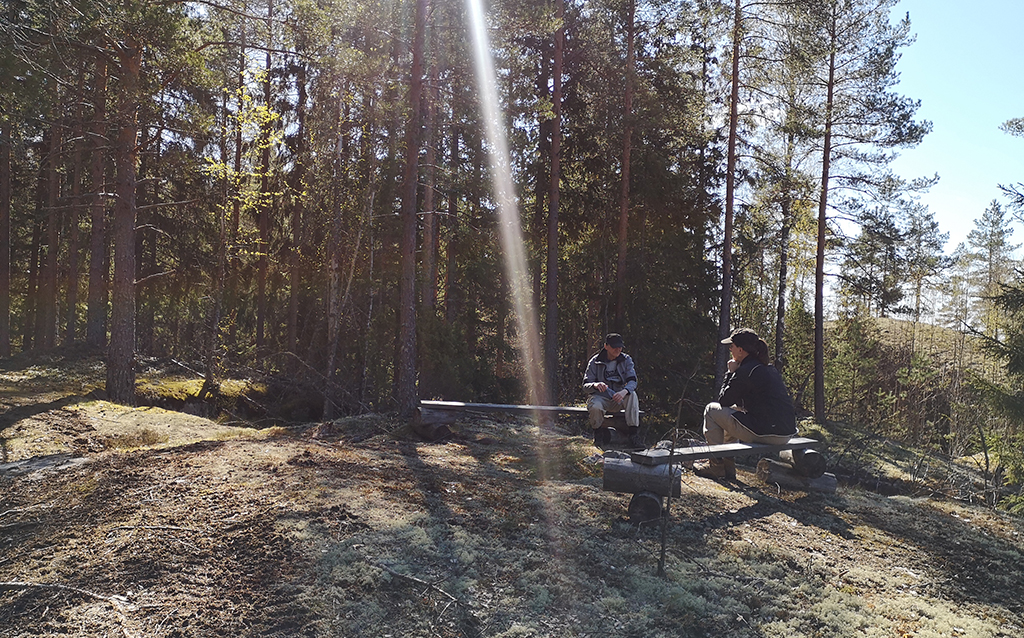
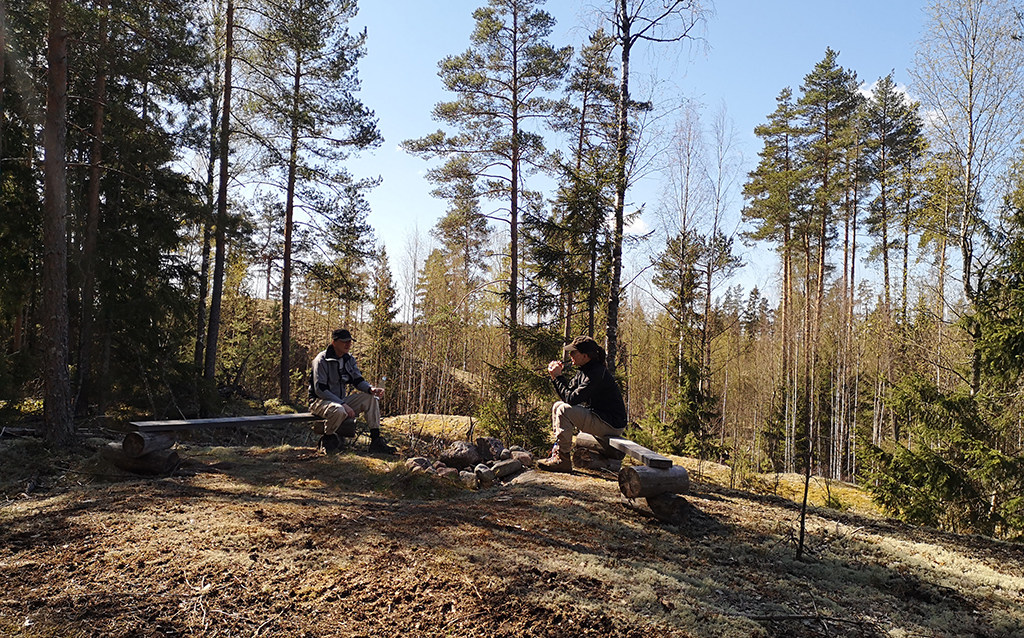
Underfoot, there is dry boreal forest soil, sand and rock. The lowest layer of vegetation consists of different types of moss and lichens. We walk at a pace that suits your wishes to a lean-to and campfire site on top of the hill. The landscape opens in three directions for kilometres.
We sit down, enjoy our packed snacks, and either sit quietly or we talk.
Forest therapy in different seasons
As we walk, we observe the forest. What kinds of trees surround us? The oldest pines are well over a hundred years old and have grown scale bark on their trunks. Although we are in rocky terrain, there might be peat moss underfoot. In addition to heather, there are lingonberries and blueberries in the undergrowth.
Spring
In the early spring, when the leaves are just beginning to sprout, conifer trees get more space in the landscape. The annual shoot and cones stand out from the large conifers. The landscape is open and far-reaching. In the brush, you can see the growth and greening of berries, lingonberries and blueberries. Fireweed and ferns sprout in the hollows. With a little luck, you might spot false morel mushrooms. The forest is filled with the songs of various forest birds. Wood pigeons are cooing. You may also hear the warning sounds of early nesters.
Summer
In the summer, the leafy trees take over the landscape. Lower down, near the swampy hollow, there are willows and birches. Higher up on the rocky slopes, large and old aspens swish in the wind. The scale bark pines remain in place regardless of the season. At the end of June, the blueberries begin to ripen. You still need to wait a couple more weeks for the blueberries to have ripened and accumulated vitamins and minerals. Summer also brings various insects. Fortunately, there is a breeze on the coniferous rocky slope, and mosquitoes do not like it there anyway.
Forest therapy in autumn and winter
Autumn
The undergrowth is turning red with lingonberries. Leafy trees are beginning to change colour and prepare for autumn tints, which in Southern Finland is often at its most beautiful and abundant in October. The days are shorter. The light appears from lower and sharpens the lowest branches of the trees. The real treasures of the autumn forest are found on the ground: after the late summer chanterelles and boletes, there comes russulas, lactarius and trumpet chanterelles. The forests of Kopula are excellent mushroom gathering ground. In many years, the season continues until November-December.
Winter
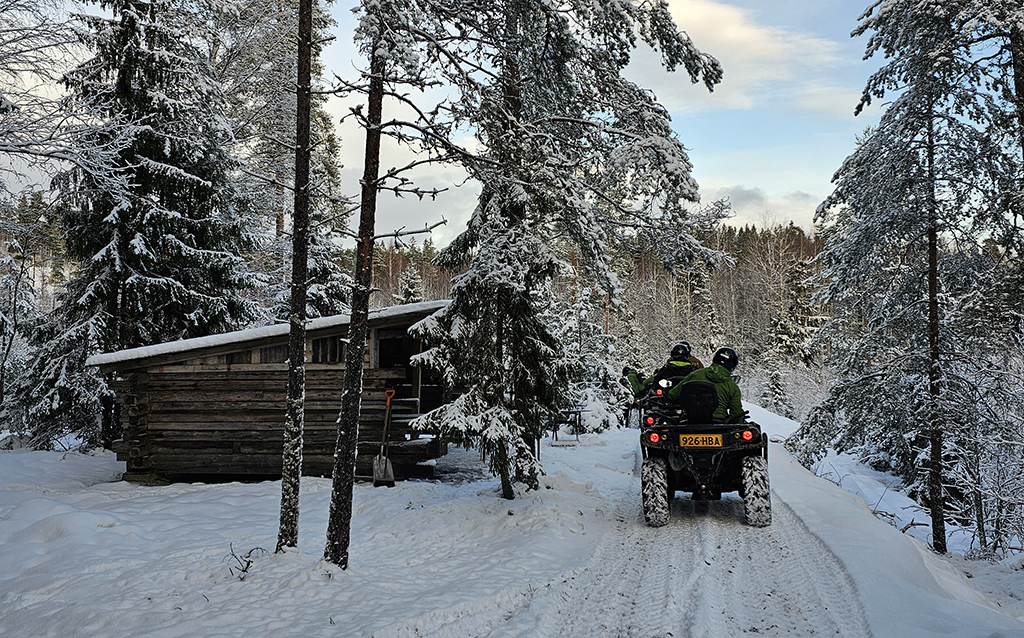
Winter is the quietest time in the forest. The leafy trees have shed their leaves. There are no leaves on the branches either. The moss and lingonberry shrubs remain green. Hopefully, snow covers the ground, and we can try out our snowshoes. The tracks and droppings of forest animals are visible in the snow.
The lean-to and fire come into their own. The fire and warm drinks keep us warm. The smell of smoke spreads in the frosty air.
What we promise
A unique nature experience tailored to your and your group’s wishes, guided by a professional guide. The shortest walk is about 15 minutes to a lean-to and the same distance back. There are trails making it easy to walk. Although we climb quite high up onto the rocky hill, the routes are easy to walk. However, the duration and length of the route can be extended to up to an hour. There is plenty of forest to explore.
If you wish, the guide can tell you about the terrain, plants, animals, forest, forestry and the health benefits of forests or you may also choose to walk in silence.
Refreshments at the rest stop are served according to your wishes. In addition to grilled sausages and campfire coffee, more sophisticated refreshments can be ordered, such as champagne with savoury snacks. During a break, we can also do e.g. a short yoga session or breathing exercises.
Request an offer for Forest therapy
Photos from previous safaris